
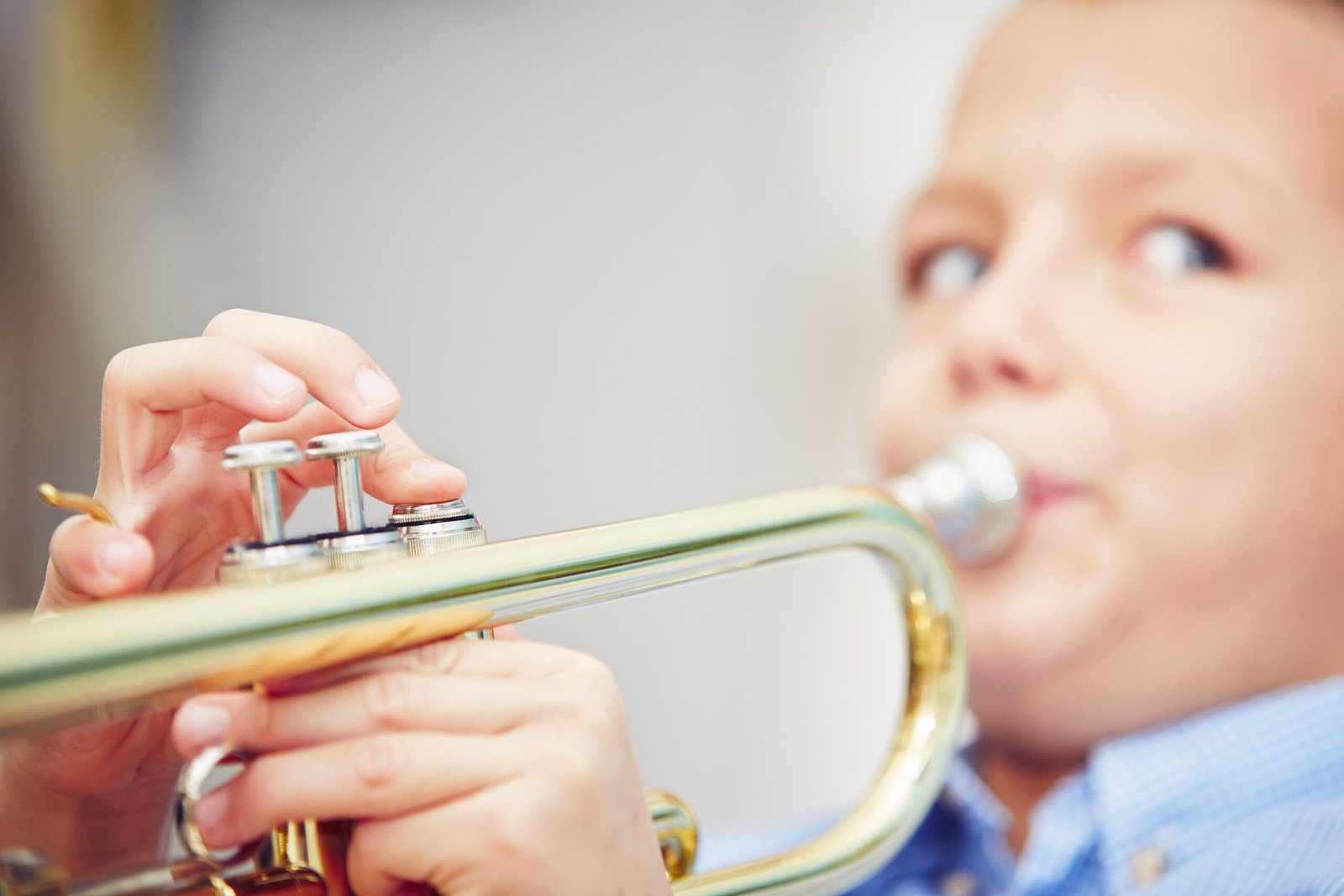
Playing a musical instrument is one of those “tiny” choices that can quietly bend a child’s entire life trajectory—academically, socially, and emotionally. Change one small thing in their week, and years later you’re looking at a completely different story (Hallam, 2010; Southgate & Roscigno, 2009).
How one letter changes everything
Think about time for a moment.
One million seconds is about 11.6 days—less than two weeks.
One billion seconds is about 31.7 years—longer than an entire childhood, a college education, and a career launch all rolled together.
All you did was change one letter.
Million to billion.
M to B.
Same word, same general idea, but that single letter quietly turns “a couple of weeks” into “a third of a lifetime.”
Now take that same idea and point it at your child’s life. A seemingly small decision—signing them up for instrumental music—can, over time, move them from a “million‑second” path to a “billion‑second” one in terms of skills, opportunities, and confidence (Hallam, 2010).
One small choice, one giant ripple
In a world of endless options—sports, clubs, apps, screens—it’s easy to think that adding one more thing won’t matter much. But choosing to have your child learn an instrument is like changing that single letter from M to B. It looks like a small adjustment in your weekly schedule, but over time it compounds into years’ worth of difference in skills, focus, and opportunity (Hille & Schupp, 2015; Jaschke et al., 2018).
You are not trying to redesign your entire life. You are simply choosing to make one “billion‑second” decision instead of a “million‑second” one—a choice that keeps paying dividends long after the last note of the last concert fades away (Hallam, 2010).
Academic gains that quietly stack up
Large‑scale research on students who regularly study a musical instrument has found that they often perform significantly better in core subjects like math, science, and language arts than their peers who are not involved in music, even after controlling for factors such as family background and prior achievement (Southgate & Roscigno, 2009). In some studies, students with sustained music participation effectively gain the equivalent of roughly a year’s worth of academic advantage over the course of their schooling (Jaschke et al., 2018).
This advantage doesn’t come from “music magic”; it comes from habits: showing up to practice, decoding notation, tracking rhythm, and tying all of that to careful listening and feedback. Those processes work the same mental muscles students use to track multi‑step math problems, follow complex instructions, and comprehend challenging texts (Degé & Schwarzer, 2011; Schellenberg, 2004). Over time, that’s the difference between just getting through school and actually having options for advanced classes, scholarships, and selective programs (Hallam, 2010; Southgate & Roscigno, 2009).
Cognitive and brain benefits
Instrument study is a workout for the brain. Reading notes, coordinating both hands, managing timing, and listening critically all have the brain juggling multiple demands at once. Regular musical training has been associated with improvements in working memory, attention, and processing speed—core cognitive skills that support learning across subjects (Bergman Nutley et al., 2014; Schellenberg, 2004).
Research with children has shown that those who receive music instruction can show greater gains in general cognitive abilities and IQ compared with children in control groups or those in non‑musical enrichment activities (Schellenberg, 2004). Other studies link music lessons to enhanced executive functions, such as planning and cognitive flexibility, which are crucial for problem solving, task switching, and adapting to new academic challenges (Bergman Nutley et al., 2014; Jaschke et al., 2018). Those are the same mental tools students need to write essays, solve multi‑step math problems, learn new technologies, and adapt to unfamiliar situations in college and beyond.
Social skills and a place to belong
Band, orchestra, and choir give children something priceless: a built‑in community where they belong, contribute, and matter. Even the shy, quiet student can become the rock‑solid clarinet player others rely on, or the dependable violist whose inner voice makes everyone else sound better. Long‑term participation in group music‑making has been linked to better social adjustment, cooperation, and classroom behavior (Hallam, 2010).
Making music together demands listening, cooperation, and shared responsibility—no one can “win” band by themselves. Experimental studies have shown that joint music‑making can increase prosocial behavior, like helping and cooperation, in young children (Kirschner & Tomasello, 2010). Long‑term ensemble participation has also been associated with higher levels of empathy and social understanding, as students learn to blend, balance, and respond to one another in real time (Rabinowitch et al., 2013). These interpersonal skills spill over into friendships, group projects, and family life.
Emotional health and resilience
Life is not easy for kids. Stress, anxiety, and social pressure show up earlier than most adults realize. Learning an instrument gives children a healthy outlet—somewhere to put those big feelings that don’t fit neatly into words. Reviews of the literature on music and child development suggest that participation in music can support emotional regulation, reduce stress, and foster a sense of well‑being (Hallam, 2010).
Students who play regularly often describe music as their “safe space” or “stress relief,” and that kind of emotional regulation matters. Studies of school‑aged children indicate that structured group music activities can boost mood, resilience, and self‑esteem, particularly when students feel competent and supported in their learning (Rickard et al., 2013; Rickard et al., 2016). When a child learns to take frustration, nervousness, or sadness and turn it into sound, they are also learning that feelings are manageable, temporary, and can be shaped rather than feared.
Discipline, focus, and executive function
Every practice session is a tiny lesson in planning and self‑control. A student decides what to work on, sets a goal (“I want this measure clean and in time”), resists the urge to quit, and evaluates progress as they go. These repeated cycles of goal‑setting, monitoring, and adjustment are the day‑to‑day training ground for executive functions such as self‑discipline, sustained attention, and time management (Bergman Nutley et al., 2014; Hille & Schupp, 2015).
Econometric and longitudinal research suggests that students who learn an instrument often show better school engagement, reduced behavioral problems, and stronger non‑cognitive skills—traits like perseverance and conscientiousness that predict long‑term success in education and the labor market (Hille & Schupp, 2015). Those same skills transfer directly into homework routines, studying for exams, managing long‑term projects, and eventually handling adult responsibilities like jobs and college assignments.
Confidence that is earned, not given
There is a special confidence that comes from walking onto a stage, heart pounding, and still playing anyway. Each performance—whether it’s a living‑room mini‑concert for grandparents or a full school performance—teaches children that they can feel afraid and still do the thing. Over time, that “I did it” feeling becomes part of how they see themselves (Hallam, 2010; Rickard et al., 2013).
Research in school contexts shows that successful music participation is associated with higher academic self‑concept and general self‑esteem, particularly when students experience mastery and positive feedback for their efforts (Hille & Schupp, 2015; Jaschke et al., 2018). Instead of “I’m just not good at things,” they have a track record: “I’ve learned hard music before; I can learn this hard thing too.” That mindset shows up later when they try out for teams, apply for jobs, audition for scholarships, or interview for college.
College readiness and life outcomes
The habits your child builds with an instrument map almost perfectly onto what colleges and employers say they want: persistence, teamwork, discipline, creativity, and the ability to handle pressure. Large‑scale studies have found that adolescents involved in music are more likely to aspire to and attend college, and they often show higher academic achievement and better school engagement than peers who are not musically involved (Southgate & Roscigno, 2009).
Longitudinal work in school settings suggests that sustained music education can support improved grades and standardized test scores over multiple years, not just short‑term boosts (Jaschke et al., 2018). The same “show up and do the work” mindset that kept them practicing scales is the one that carries them through tough freshman‑year courses and into adult life. For many students, music becomes the anchor that provides continuity, community, and a sense of identity in the midst of major life transitions (Hallam, 2010; Rickard et al., 2016).
For parents: what this “one little thing” really looks like
Here is the good news: making this billion‑second choice for your child does not require you to overhaul your life. It looks like:
- Renting or purchasing an appropriate beginner instrument.
- Committing to a realistic practice routine (even 10–15 minutes a day to start).
- Connecting your child with a good teacher, ensemble, or program—school‑based, community‑based, homeschool co‑op, or a dedicated music academy in your area (Hallam, 2010).
If your child is in a homeschool setting, programs specifically designed for homeschool students can provide the structure, community, and performance opportunities that make all of these benefits more likely to take root and grow. From there, the compounding begins. Weeks become months, months become years, and one day you realize you didn’t just sign them up for “music lessons”—you quietly changed the scale of what their whole future can be.
One letter, one instrument, one future
You already understand that a million seconds and a billion seconds are not even in the same universe of impact. Million is “almost two weeks.” Billion is “a third of a lifetime.” All that changed was one letter.
In the same way, choosing to add “plays an instrument” to your child’s story may look like one more line on a busy calendar, but it can grow into an entirely different life arc: stronger academics, healthier emotions, deeper friendships, and more doors open in college and beyond (Hallam, 2010; Jaschke et al., 2018; Southgate & Roscigno, 2009). One small decision, made now, can echo out for years—just like the last note of a song that keeps ringing in your ears long after the performance is done.
References
Bergman Nutley, S., Darki, F., & Klingberg, T. (2014). Music practice is associated with development of working memory during childhood and adolescence. Frontiers in Human Neuroscience, 7, Article 926. https://doi.org/10.3389/fnhum.2013.00926
Degé, F., & Schwarzer, G. (2011). The effect of a music program on phonological awareness in preschoolers. Frontiers in Psychology, 2, 124. https://doi.org/10.3389/fpsyg.2011.00124
Hallam, S. (2010). The power of music: Its impact on the intellectual, social and personal development of children and young people. International Journal of Music Education, 28(3), 269–289. https://doi.org/10.1177/0255761410370658
Hille, A., & Schupp, J. (2015). How learning a musical instrument affects the development of skills. Economics of Education Review, 44, 56–82. https://doi.org/10.1016/j.econedurev.2014.10.007
Jaschke, A. C., Honing, H., & Scherder, E. J. A. (2018). Longitudinal analysis of music education on academic performance in primary school children. Frontiers in Neuroscience, 12, 1038. https://doi.org/10.3389/fnins.2018.01038
Kirschner, S., & Tomasello, M. (2010). Joint music making promotes prosocial behavior in 4‑year‑old children. Evolution and Human Behavior, 31(5), 354–364. https://doi.org/10.1016/j.evolhumbehav.2010.04.004
Rabinowitch, T.‑C., Cross, I., & Burnard, P. (2013). Long‑term musical group interaction has a positive influence on empathy in children. Psychology of Music, 41(4), 484–498. https://doi.org/10.1177/0305735612440609
Rickard, N. S., Bambrick, C. J., & Gill, A. (2013). Absence of widespread psychosocial and cognitive effects of school‑based music instruction in 10–13‑year‑old students. International Journal of Music Education, 31(1), 57–78. https://doi.org/10.1177/0255761411431399
Rickard, N. S., Appelman, P., James, R., Murphy, F., Gill, A., & Bambrick, C. (2016). Orchestrating life skills: The effect of increased school‑based music classes on children’s social competence and self‑esteem. International Journal of Music Education, 34(2), 208–218. https://doi.org/10.1177/0255761414563195
Schellenberg, E. G. (2004). Music lessons enhance IQ. Psychological Science, 15(8), 511–514. https://doi.org/10.1111/j.0956-7976.2004.00711.x
Southgate, D. E., & Roscigno, V. J. (2009). The impact of music on childhood and adolescent achievement. Social Science Quarterly, 90(1), 4–21. https://doi.org/10.1111/j.1540-6237.2009.00598.x